Shakopee, MN · Garage Door Service
Off-track garage door repair for Chanhassen's 9,607 households, mostly built around 1993. We travel 7 miles from Shakopee to fix tracks bent by cold-weather ice buildup.
Chanhassen sits apart from a lot of the rest of this service area in one important way: the houses are newer. The broader coverage area runs from 1957 up through 2005, with a median around 1986, but Chanhassen's own median build year lands at 1993. That's a real gap, and it means the doors, tracks, and openers going bad here today are a different generation than what we're pulling out of houses built in the 60s and 70s elsewhere in the territory.
With roughly 9,607 households in the area and a median household income of $138,034, this is a market where people tend to fix things properly rather than patch them, and where the original builder-grade hardware from the early-to-mid 90s is now old enough to start failing on its own terms - not from neglect, just from age. Steel doors, extension or early torsion spring setups, and chain-drive openers from that era are common, and parts availability depends on which brand the builder used.
The honest limitation here: if your door or opener predates 1993 significantly, or was a custom install, we may need to special-order a part rather than have it on the truck. We'll tell you that up front rather than guess.
A garage built in 1993 is old enough that its opener has likely already been replaced once, sometimes twice, but the door panels and track are often still original. That means steel panels starting to rust at the bottom corners, rollers worn oval instead of round, and torsion springs that have done thirty-plus years of cycles without ever being touched.
The cold-severe climate this area sits in doesn't help. Minnesota winters put real stress on steel doors and on springs, since cold metal is more brittle under load. Openers from the early 90s also predate a lot of the safety-sensor requirements that came later, so we sometimes find garages here still running gear that's due for more than a repair - it's due for a swap to something built to current code.
We see fewer of the ancient one-piece slab doors here than in older parts of the territory, and more of the sectional steel doors with roll-up track that came standard through the 90s builder boom. That's a more repairable design overall, but the springs and cables still wear out on a schedule, not a warning.
We run out of Shakopee, and Chanhassen is about 7 miles out - close enough that it's a regular stop on the route, not a special trip. We don't keep a second location or drop-box in Chanhassen itself; every job here is a truck dispatched from Shakopee with the parts loaded based on what you tell us on the call.
Because the area's housing stock leans newer than parts of the rest of our coverage, we try to have the more common 90s-era spring sizes and roller types on hand before we head out, rather than working it out in your driveway. If your situation is unusual - an odd door width, a discontinued opener model - that's the one case where we may need a day to get the part before we can finish the job.
Most calls in Chanhassen fall into a few categories: torsion springs that finally give out after decades of winter cycles, openers from the 90s and early 2000s that stop responding to remotes or keypads, and rollers or hinges that have worn enough to make the door bind in the track. We also get panel damage - a car backing into a bottom section, or a door that's been forced when it was already binding.
Given the income and housing profile here, we see more requests for full opener replacement rather than patch repairs, and more interest in matching new hardware to the existing door rather than replacing the whole unit. That's often the right call when the door itself is sound. When it isn't - rusted-through panels, a door that's been off its track more than once - replacement usually costs less over time than repeated service calls, and we'll say so instead of running up a repair bill on a door that's done.
No. We work out of Shakopee and drive to Chanhassen, about 7 miles away. It's a regular part of our route, so it doesn't add the wait time a farther call might.
A lot of Chanhassen homes were built around 1993, and many still have original or first-replacement openers from that era. They can run for decades but start showing age through slow response, intermittent remotes, or grinding gears before they fail outright.
Depends on the door, not just the age. Steel sectional doors from the 90s building boom are usually solid candidates for spring, roller, or opener repair. Rust-through panels or a door that's derailed more than once usually mean replacement makes more financial sense.
Yes. This area sits in a cold-severe climate zone, and steel springs and cables get more brittle in deep cold. Winter is when we see the most snapped torsion springs, especially on doors that haven't been serviced in years.
Call now or request a free quote - same-day service on most repairs, upfront written pricing.
Chanhassen is a mid-size suburb, about 9,607 households, and that scale matters for how off-track calls show up here. It's not a handful of streets we're guessing about - it's a broad run of similar homes built around the same time, mostly in the early-to-mid 1990s, which means the same rollers, the same track gauge, and the same failure points showing up again and again.
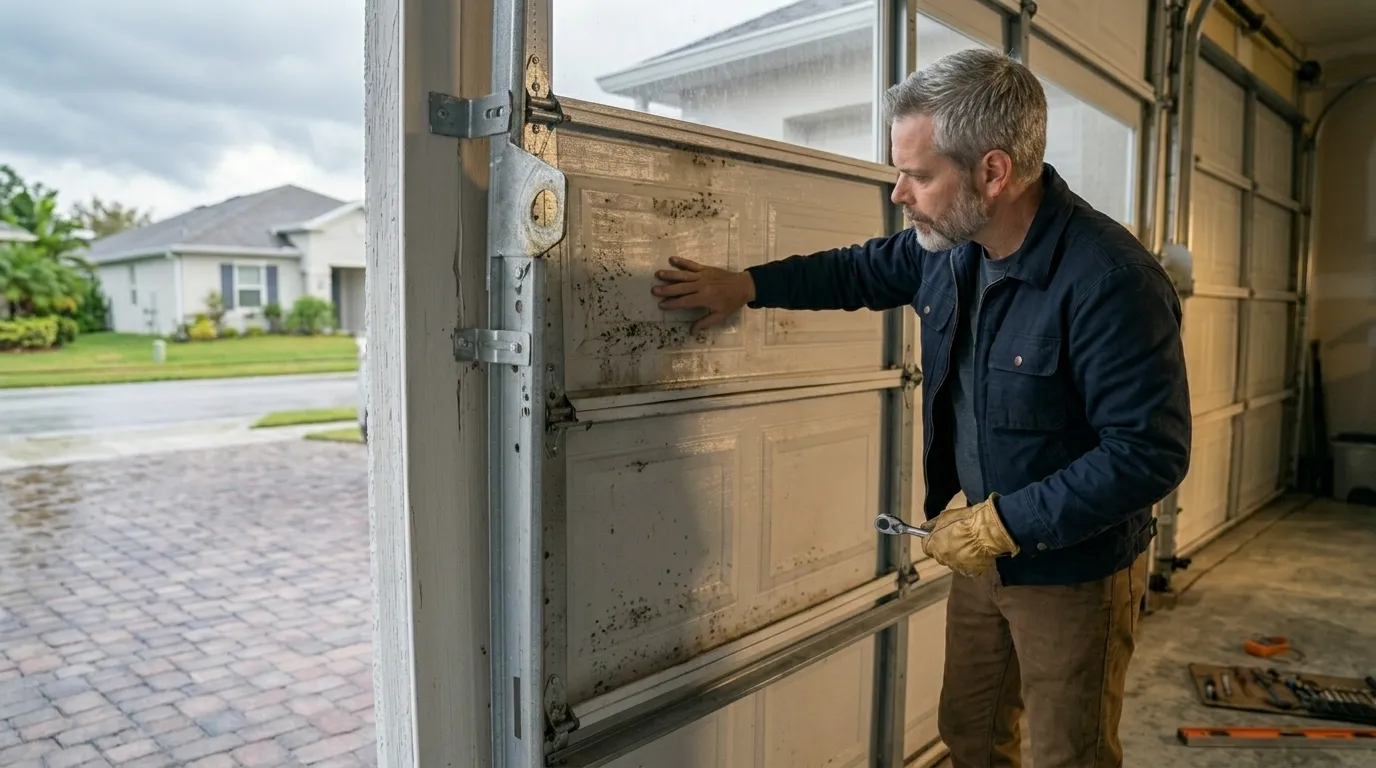
When a door jumps track, the first thing we check is whether a roller snapped out of the track versus the track itself getting bent or pulled away from the wall. Those are two different repairs. A roller that popped out from a broken cable or a slipped panel can often be walked back into the track and re-hung the same visit. A track that's bent - usually from someone backing into it, or from a spring failure that let the door slam sideways - has to come off and get replaced, because a bent track will just throw the door again even after you re-seat it.
We travel out from Shakopee for these calls, about 7 miles, so we bring what a typical off-track job needs: replacement track sections, rollers, and cable, rather than showing up to diagnose and having to come back with parts.
Homes here mostly went up around 1993, which puts a lot of doors and openers into a specific window - old enough that original hardware is wearing out, new enough that most of it isn't the oddball stuff you'd find on a much older door. That's a mixed blessing. Parts are usually available, but the track brackets and jamb mounts from that era are sometimes a slightly different spacing than what's sold today, so a straight swap doesn't always bolt up clean.
The other complication is the cold. This area sits in a severe cold climate band, and that changes what "off track" actually means in January versus July. Cold makes garage door lubricant thicken and hardware contract slightly, so a door that was marginal in fall can jump track the first hard freeze - often because ice built up in the track itself and shoved the rollers out of line. We see this pattern often enough here that we check for ice residue in the track before we blame the hardware.
One honest limit: if the track is bent AND the wall bracket that holds it has pulled out of the framing, that's more than an off-track repair - it's a structural fix, and we'll tell you that on site rather than force a patch that won't hold.
We don't post a flat number for this because off-track repairs range a lot depending on whether it's a roller re-seat or a full track replacement on both sides. What we can tell you is what tends to drive the cost in this area specifically: household income here runs higher than the wider service area, at a median around $138,034, and we've found that translates into more owners opting for full track replacement on both sides rather than a single-side patch, since it holds up better against the cold-weather ice issue described above.
A single bent track section runs less than replacing both tracks plus rollers and cable, and if the spring that caused the slam is also shot, that's an added cost on top. We'll always give you the number before we start, broken out by part, so you can see what's a must-fix versus what's a nice-to-have while the door's already open.
Most off-track jobs here are a same-visit fix once we're on site - a re-seated roller and a track adjustment can take under an hour. Full track replacement on both sides takes longer, usually a couple hours, because the door has to come down, the old track pulled, and the new one shimmed and leveled before the door goes back up and gets tested through a full cycle.
The variable is parts. Given the 1993-era hardware common in Chanhassen, most of what we need is stock, but if a bracket or a non-standard track gauge shows up, that can mean a return trip. We'd rather tell you that up front than promise a same-day fix we can't back up. Either way, we're coming from Shakopee, about 7 miles out, so factor that into scheduling rather than assuming a local same-hour arrival.
In this climate band, cold weather is a common trigger. Ice can build up inside the track and push the rollers out of alignment, or a cold-stiffened spring can fail and let the door slam sideways. We check for ice residue and spring condition first before assuming the track itself is bad.
Sometimes, if it's a roller that popped out without bending the track, we can re-seat it the same visit. If the track is bent or pulled from the wall, forcing the door back on won't hold - it needs the bent section replaced or the bracket refastened.
No, we run out of Shakopee, about 7 miles away, and travel to Chanhassen for calls. We carry the track, roller, and cable stock a typical off-track job needs so most repairs don't require a second trip.
If the door and opener are otherwise sound and it's just the track that's bent, repair usually makes sense. If the track damage came with a cracked panel or worn-out hardware throughout, replacing the whole door can cost less over time than patching each part separately.