Shakopee, MN · Garage Door Service
Golden Valley homes run older than most of our service area, median build 1966 versus 1986 across the wider area. That gap changes panel sizing and hardware on the job.
Chanhassen sits apart from a lot of the rest of this service area in one important way: the houses are newer. The broader coverage area runs from 1957 up through 2005, with a median around 1986, but Chanhassen's own median build year lands at 1993. That's a real gap, and it means the doors, tracks, and openers going bad here today are a different generation than what we're pulling out of houses built in the 60s and 70s elsewhere in the territory.
With roughly 9,607 households in the area and a median household income of $138,034, this is a market where people tend to fix things properly rather than patch them, and where the original builder-grade hardware from the early-to-mid 90s is now old enough to start failing on its own terms - not from neglect, just from age. Steel doors, extension or early torsion spring setups, and chain-drive openers from that era are common, and parts availability depends on which brand the builder used.
The honest limitation here: if your door or opener predates 1993 significantly, or was a custom install, we may need to special-order a part rather than have it on the truck. We'll tell you that up front rather than guess.
A garage built in 1993 is old enough that its opener has likely already been replaced once, sometimes twice, but the door panels and track are often still original. That means steel panels starting to rust at the bottom corners, rollers worn oval instead of round, and torsion springs that have done thirty-plus years of cycles without ever being touched.
The cold-severe climate this area sits in doesn't help. Minnesota winters put real stress on steel doors and on springs, since cold metal is more brittle under load. Openers from the early 90s also predate a lot of the safety-sensor requirements that came later, so we sometimes find garages here still running gear that's due for more than a repair - it's due for a swap to something built to current code.
We see fewer of the ancient one-piece slab doors here than in older parts of the territory, and more of the sectional steel doors with roll-up track that came standard through the 90s builder boom. That's a more repairable design overall, but the springs and cables still wear out on a schedule, not a warning.
We run out of Shakopee, and Chanhassen is about 7 miles out - close enough that it's a regular stop on the route, not a special trip. We don't keep a second location or drop-box in Chanhassen itself; every job here is a truck dispatched from Shakopee with the parts loaded based on what you tell us on the call.
Because the area's housing stock leans newer than parts of the rest of our coverage, we try to have the more common 90s-era spring sizes and roller types on hand before we head out, rather than working it out in your driveway. If your situation is unusual - an odd door width, a discontinued opener model - that's the one case where we may need a day to get the part before we can finish the job.
Most calls in Chanhassen fall into a few categories: torsion springs that finally give out after decades of winter cycles, openers from the 90s and early 2000s that stop responding to remotes or keypads, and rollers or hinges that have worn enough to make the door bind in the track. We also get panel damage - a car backing into a bottom section, or a door that's been forced when it was already binding.
Given the income and housing profile here, we see more requests for full opener replacement rather than patch repairs, and more interest in matching new hardware to the existing door rather than replacing the whole unit. That's often the right call when the door itself is sound. When it isn't - rusted-through panels, a door that's been off its track more than once - replacement usually costs less over time than repeated service calls, and we'll say so instead of running up a repair bill on a door that's done.
No. We work out of Shakopee and drive to Chanhassen, about 7 miles away. It's a regular part of our route, so it doesn't add the wait time a farther call might.
A lot of Chanhassen homes were built around 1993, and many still have original or first-replacement openers from that era. They can run for decades but start showing age through slow response, intermittent remotes, or grinding gears before they fail outright.
Depends on the door, not just the age. Steel sectional doors from the 90s building boom are usually solid candidates for spring, roller, or opener repair. Rust-through panels or a door that's derailed more than once usually mean replacement makes more financial sense.
Yes. This area sits in a cold-severe climate zone, and steel springs and cables get more brittle in deep cold. Winter is when we see the most snapped torsion springs, especially on doors that haven't been serviced in years.
Call now or request a free quote - same-day service on most repairs, upfront written pricing.
We work out of Shakopee and drive the 16 miles up to Golden Valley for panel jobs, so the call has to happen before the truck does. Tell us the door width, the number of panels, and whether it's a full replacement or a single damaged section. Golden Valley's housing stock runs older than the typical build across our service area - median year built here is 1966, versus a median closer to 1986 across the 33 areas we cover. That gap matters before anyone loads a panel onto the truck, because a door built to fit a mid-1960s opening doesn't always match the stock sizing that dominates newer construction. We confirm panel dimensions and section count on the phone or from photos before we commit to a specific replacement panel, not after we're standing in the driveway. If the exact panel isn't a stock match, we say so up front rather than showing up with the wrong piece and rescheduling. Booking a panel job here means giving us enough to check fit ahead of time, since a mismatched panel wastes your afternoon and ours.
We don't keep a branch or drop-off point in Golden Valley - every job routes through Shakopee, so lead time reflects that drive both ways.
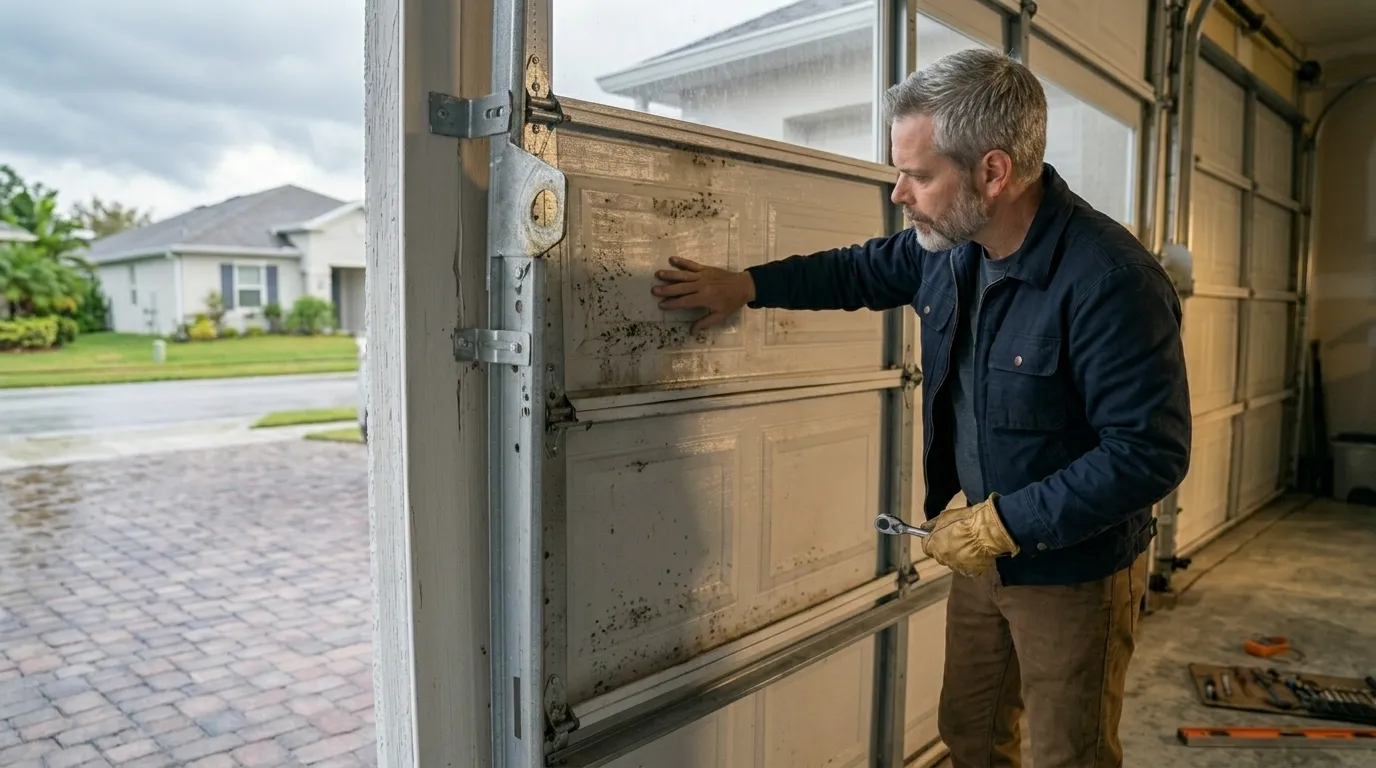
On a door built in the 1960s, panel damage tends to show up as denting or rust-through on the bottom section first, since that's the panel that takes the brunt of contact with cars, kids' bikes, and salt spray tracked in during a Minnesota winter. Golden Valley sits in the same severe cold climate band as the rest of our service area, and that cold plays a role: steel panels here go brittle faster in sub-zero months, so a dent that would just be cosmetic in July can crack the seam by February. Wood-composite panels from that era, if the house still has them, show a different failure - swelling and delamination at the bottom edge from years of snowmelt sitting against the door. Aluminum-framed panels from later remodels crease rather than crack, which sometimes looks worse than it is. What you're looking at when you call us matters more than how old the door is on paper, since two doors from the same build year can be in very different shape depending on which way the garage faces and how much direct weather it's caught over the decades.
The main complication on a 1966-era garage in Golden Valley isn't the panel itself, it's matching it to a section and track system that predates a lot of the current stock sizing. Doors from that build year sometimes used panel heights and hardware spacing that later manufacturers changed, so a modern replacement panel bolted onto an original track can bind or hang unevenly if nobody checks the spec first. We also run into full doors where only one panel is available to buy but the color or texture no longer matches the surviving panels, since finishes and grain patterns from the 1960s aren't in current production. That's an honest limitation: we can source a functional match, but we can't always source an invisible one, and we'll tell you that before we order anything. Cold-climate insulation retrofits are another wrinkle - some Golden Valley homeowners have swapped in insulated panels over the years while leaving the original frame, which changes the weight the opener and springs are rated for. We check that balance before installing a new panel, not after.
For a panel job we bring standard steel panel sections in common widths, insulated and non-insulated options, replacement hinges, end stiles, and the fasteners that pair with both older and current track hardware. Given the age spread in Golden Valley's housing - much of it built well before the newer construction that fills out other parts of our service area - we also carry a set of transition hardware for doors where the panel we're installing doesn't perfectly match the original spacing. What we don't carry is custom millwork or discontinued wood-panel replicas; if your door needs an exact vintage match, that's a special order with its own lead time, and we'll say so rather than pretend we can pull it off the truck. Weatherstripping and bottom seals come along too, since a new panel installed against an old, hardened seal doesn't seal the way it should in a cold-climate winter. We load based on what you tell us on the call, then confirm fit on site before cutting or drilling anything.
Swapping a single panel sounds like a bolt-off, bolt-on job, and on a newer door it sometimes is. On a Golden Valley door built around 1966, it's less straightforward, because removing one panel shifts the load on the ones above and below it, and older track hardware doesn't always tolerate that shift the way current systems do. If you're comfortable with a torsion spring under load and confident the replacement panel matches your existing hardware spacing, a single non-structural panel swap is within reach for someone handy. Where we'd stop you is any job involving the bottom panel with an attached opener bracket, or any door where the panel color and texture need to blend with panels that are decades out of production - that's where a mismatch or a misaligned track turns a two-hour job into a full afternoon. Given the age of a lot of the housing stock in this part of our coverage area, we'd rather quote the job accurately than have you order the wrong panel size twice.
Golden Valley's homes run older on average, with a median build year around 1966, well before the median build year of 1986 across the wider area we cover. Older doors sometimes used panel heights and hardware spacing that current manufacturers changed, so fit has to be confirmed before we order or install a replacement panel.
No. We're based in Shakopee and drive out to Golden Valley, about 16 miles, for panel jobs. There's no local drop-off point or depot here, so scheduling factors in the drive time both ways.
Sometimes, but not always. Finishes and grain patterns used on garage doors decades ago aren't always in current production. We'll tell you honestly if an exact match isn't available before you commit to ordering, rather than promise something we can't deliver.
On a newer door, sometimes. On an older Golden Valley door, removing one panel shifts the load on the ones around it, and original hardware doesn't always tolerate that the way current track systems do. We'd stop short of recommending DIY on anything involving the bottom panel or opener bracket.