Shakopee, MN · Garage Door Service
Minnetrista homes mostly went up in the early '90s, meaning wide steel sectional doors on torsion springs. We drive out from Shakopee to fix what that era of door actually breaks.
Chanhassen sits apart from a lot of the rest of this service area in one important way: the houses are newer. The broader coverage area runs from 1957 up through 2005, with a median around 1986, but Chanhassen's own median build year lands at 1993. That's a real gap, and it means the doors, tracks, and openers going bad here today are a different generation than what we're pulling out of houses built in the 60s and 70s elsewhere in the territory.
With roughly 9,607 households in the area and a median household income of $138,034, this is a market where people tend to fix things properly rather than patch them, and where the original builder-grade hardware from the early-to-mid 90s is now old enough to start failing on its own terms - not from neglect, just from age. Steel doors, extension or early torsion spring setups, and chain-drive openers from that era are common, and parts availability depends on which brand the builder used.
The honest limitation here: if your door or opener predates 1993 significantly, or was a custom install, we may need to special-order a part rather than have it on the truck. We'll tell you that up front rather than guess.
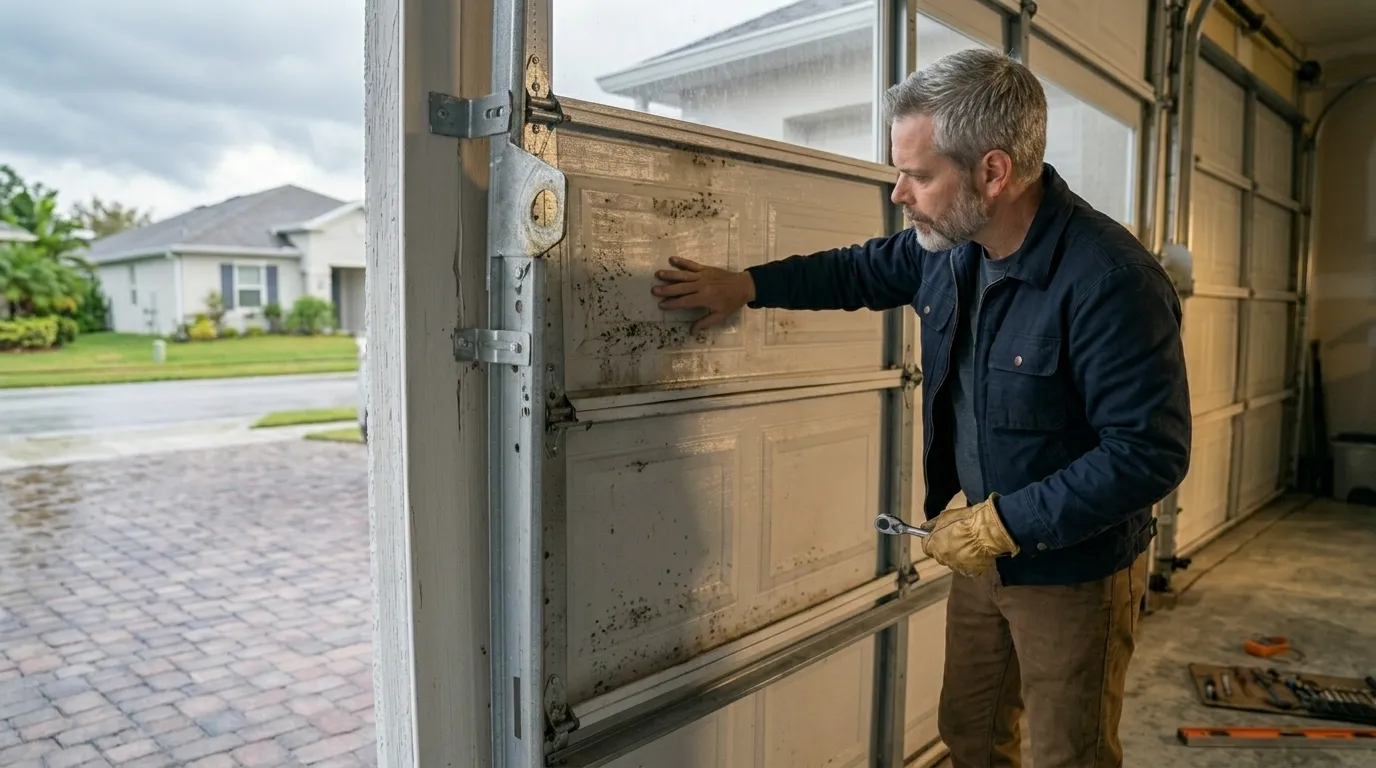
A garage built in 1993 is old enough that its opener has likely already been replaced once, sometimes twice, but the door panels and track are often still original. That means steel panels starting to rust at the bottom corners, rollers worn oval instead of round, and torsion springs that have done thirty-plus years of cycles without ever being touched.
The cold-severe climate this area sits in doesn't help. Minnesota winters put real stress on steel doors and on springs, since cold metal is more brittle under load. Openers from the early 90s also predate a lot of the safety-sensor requirements that came later, so we sometimes find garages here still running gear that's due for more than a repair - it's due for a swap to something built to current code.
We see fewer of the ancient one-piece slab doors here than in older parts of the territory, and more of the sectional steel doors with roll-up track that came standard through the 90s builder boom. That's a more repairable design overall, but the springs and cables still wear out on a schedule, not a warning.
We run out of Shakopee, and Chanhassen is about 7 miles out - close enough that it's a regular stop on the route, not a special trip. We don't keep a second location or drop-box in Chanhassen itself; every job here is a truck dispatched from Shakopee with the parts loaded based on what you tell us on the call.
Because the area's housing stock leans newer than parts of the rest of our coverage, we try to have the more common 90s-era spring sizes and roller types on hand before we head out, rather than working it out in your driveway. If your situation is unusual - an odd door width, a discontinued opener model - that's the one case where we may need a day to get the part before we can finish the job.
Most calls in Chanhassen fall into a few categories: torsion springs that finally give out after decades of winter cycles, openers from the 90s and early 2000s that stop responding to remotes or keypads, and rollers or hinges that have worn enough to make the door bind in the track. We also get panel damage - a car backing into a bottom section, or a door that's been forced when it was already binding.
Given the income and housing profile here, we see more requests for full opener replacement rather than patch repairs, and more interest in matching new hardware to the existing door rather than replacing the whole unit. That's often the right call when the door itself is sound. When it isn't - rusted-through panels, a door that's been off its track more than once - replacement usually costs less over time than repeated service calls, and we'll say so instead of running up a repair bill on a door that's done.
No. We work out of Shakopee and drive to Chanhassen, about 7 miles away. It's a regular part of our route, so it doesn't add the wait time a farther call might.
A lot of Chanhassen homes were built around 1993, and many still have original or first-replacement openers from that era. They can run for decades but start showing age through slow response, intermittent remotes, or grinding gears before they fail outright.
Depends on the door, not just the age. Steel sectional doors from the 90s building boom are usually solid candidates for spring, roller, or opener repair. Rust-through panels or a door that's derailed more than once usually mean replacement makes more financial sense.
Yes. This area sits in a cold-severe climate zone, and steel springs and cables get more brittle in deep cold. Winter is when we see the most snapped torsion springs, especially on doors that haven't been serviced in years.
Call now or request a free quote - same-day service on most repairs, upfront written pricing.
Most houses in Minnetrista went up around 1993, near the top of this area's overall 1957-2005 build window. That era of construction favored wider two-car garages, and builders were putting in steel sectional doors, usually raised-panel, on torsion spring hardware rather than the older extension-spring setups. A double door from that period is heavier than what came before it, and the springs sized for it aren't the same as what you'd find on a narrower 1960s single door.
What that means for cost: a torsion spring replacement on a 16x7 double door runs more than a single-door job, simply because the spring has to lift more steel. Cable and roller wear tends to show up earlier on these wider doors too, since there's more door swinging on the same two tracks. We don't quote a number here without seeing the door - torsion spring sizing depends on door weight, and doors from this build era vary between builders. What we can tell you is that if your opener is original to a 1990s install, the gears inside it are almost certainly older than the door hardware itself, since openers get replaced more often than the door.
Minnetrista's median household income runs well above the wider service area we cover from Shakopee - $156,346 against $117,344 - and homeowners here more often ask for the door to be fixed right the first time rather than patched to get by another season.
For a 1990s-built double door, the parts that actually get used are torsion springs sized for a heavier steel panel door, extension cables rated for that spring type, and steel rollers that fit a wider track radius than an older single-car setup. We carry standard torsion spring sizes that cover most of what went into homes built in this window, along with the shafts and cable drums that pair with them.
What we don't carry on the truck: obscure aluminum-panel doors or anything custom-ordered from a builder who's since gone out of business. If your door turns out to be one of those - which happens more with older 1957-1970s stock than with 1990s builds - we may need to order a part rather than fix it same-visit. That's the honest limitation: we stock for the doors this area actually has in volume, not every door ever installed.
Opener parts are a separate category. A chain-drive opener from the early 90s uses different mounting hardware than the belt-drive units sold today, and we carry adapter brackets for that swap rather than trying to match old parts that aren't made anymore. Given the distance out - Minnetrista sits about 16 miles from our Shakopee base - we try to load the truck with what a job like this actually needs before we leave, rather than making a second trip.
Minnetrista sits in a cold-severe climate band, and a door built in the early 90s wasn't always insulated to a standard that holds up well after 30 winters. Cold steel contracts, and on a door that size, that shows up as a track that's slightly out of alignment by February even if it was fine in October. It's not a defect - it's just what happens to a 16x7 steel door over three decades of freeze-thaw.
The other complication is scale mismatch. Minnetrista has about 2,912 households, smaller than some of the areas we cover, which means fewer garages built by any single production builder. That's actually good news for repair work - it means less chance of running into a proprietary track or panel system unique to one subdivision. What we see more often here is straightforward wear: torsion springs that have done their 10,000-cycle life, openers with stripped gears, and rollers that were steel from the factory and never upgraded to nylon.
One thing we won't do is talk you into a full door replacement when a spring and a roller set will get you another decade. If the door panels themselves are still square and the steel isn't rusted through, repair almost always beats replacement on a door from this era.
On a door this age, the first sign is usually the opener straining - a grinding noise as the motor works harder to lift a spring that's lost tension. That's different from a door that won't move at all, which usually means the spring has already gone and the cable is either slack or snapped.
A second pattern specific to doors built around 1993: the door lifts unevenly, one side rising faster than the other. On a double-wide door, that's often one of the two torsion springs failing while the other still holds, since they wear at slightly different rates even when installed the same day. You'll notice it as a visible tilt in the door as it opens, not just a noise.
Cold mornings make small problems loud. A track that's a quarter-inch out of alignment might run quiet in summer and bang on every cycle once temperatures drop, because the steel has less give. If you're hearing a new noise only in winter, that's often the tell rather than a sign of something newly broken.
We drive out from Shakopee for these calls - about 16 miles - and the job itself, once we're there, usually comes down to spring, cable, or roller rather than anything more involved.
Steel contracts in cold weather, and a track that's slightly out of alignment can run quiet most of the year and then bang or grind once temperatures drop. It's usually not a new problem - it's an existing one made louder by the cold. Given Minnetrista's cold-severe climate, this pattern is common on doors that have been in place for two or three decades.
If the panels are still square, the steel isn't rusted through, and the problem is a spring, cable, or roller, repair almost always makes more sense than replacement. Doors built around 1993 in this area were generally solid steel sectional doors - the hardware wears out well before the door itself does.
We carry adapter brackets to pair modern belt-drive openers with older mounting hardware, since chain-drive units from the early 90s don't match today's standard mounts. For an obscure or custom part specific to one builder's install, we may need to order it rather than fix it the same visit.
About 16 miles from our base in Shakopee. We load the truck for the job type before heading out, since it's far enough that a second trip for a missing part costs real time.