Shakopee, MN · Garage Door Service
Orono homes mostly went up around 1982, before today's insulated doors and torsion setups. We drive out from Shakopee, 14 miles away, to work on that older hardware.
Chanhassen sits apart from a lot of the rest of this service area in one important way: the houses are newer. The broader coverage area runs from 1957 up through 2005, with a median around 1986, but Chanhassen's own median build year lands at 1993. That's a real gap, and it means the doors, tracks, and openers going bad here today are a different generation than what we're pulling out of houses built in the 60s and 70s elsewhere in the territory.
With roughly 9,607 households in the area and a median household income of $138,034, this is a market where people tend to fix things properly rather than patch them, and where the original builder-grade hardware from the early-to-mid 90s is now old enough to start failing on its own terms - not from neglect, just from age. Steel doors, extension or early torsion spring setups, and chain-drive openers from that era are common, and parts availability depends on which brand the builder used.
The honest limitation here: if your door or opener predates 1993 significantly, or was a custom install, we may need to special-order a part rather than have it on the truck. We'll tell you that up front rather than guess.
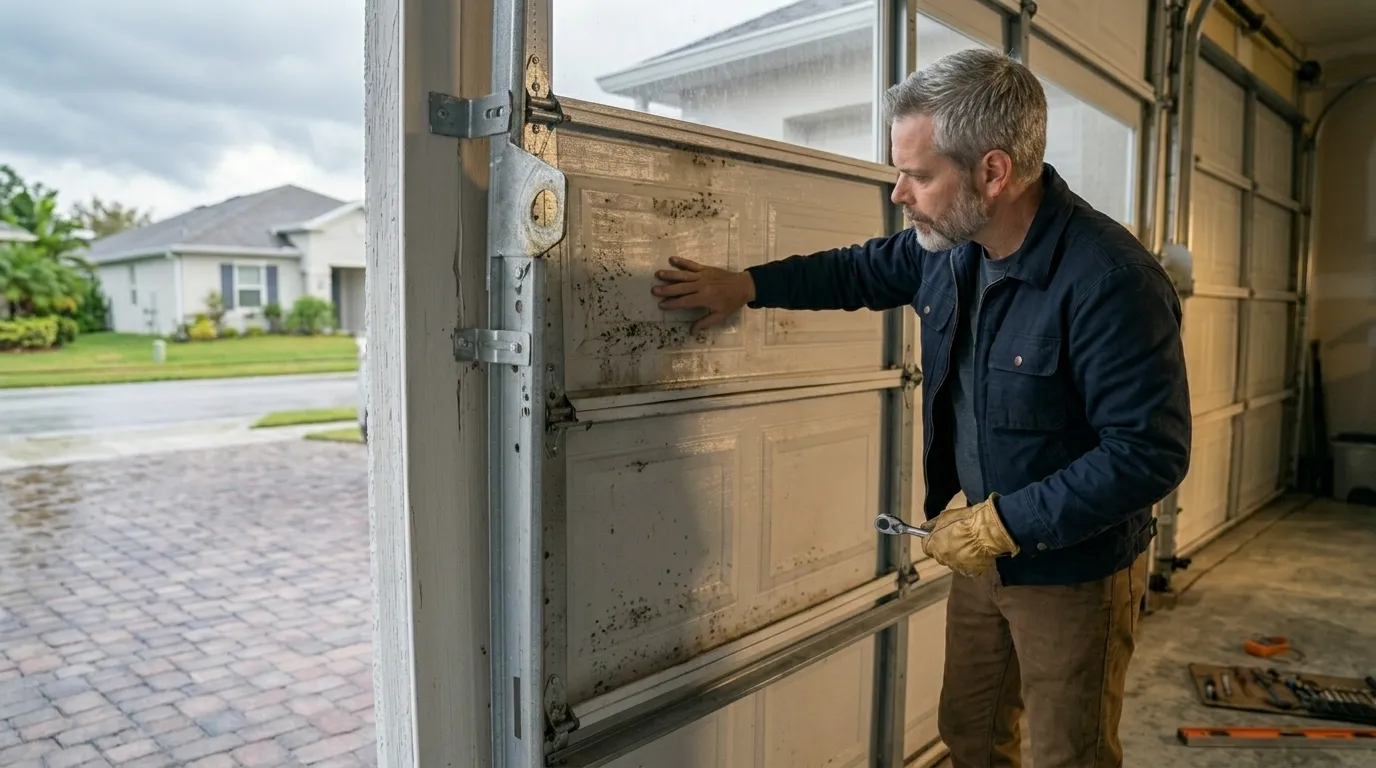
A garage built in 1993 is old enough that its opener has likely already been replaced once, sometimes twice, but the door panels and track are often still original. That means steel panels starting to rust at the bottom corners, rollers worn oval instead of round, and torsion springs that have done thirty-plus years of cycles without ever being touched.
The cold-severe climate this area sits in doesn't help. Minnesota winters put real stress on steel doors and on springs, since cold metal is more brittle under load. Openers from the early 90s also predate a lot of the safety-sensor requirements that came later, so we sometimes find garages here still running gear that's due for more than a repair - it's due for a swap to something built to current code.
We see fewer of the ancient one-piece slab doors here than in older parts of the territory, and more of the sectional steel doors with roll-up track that came standard through the 90s builder boom. That's a more repairable design overall, but the springs and cables still wear out on a schedule, not a warning.
We run out of Shakopee, and Chanhassen is about 7 miles out - close enough that it's a regular stop on the route, not a special trip. We don't keep a second location or drop-box in Chanhassen itself; every job here is a truck dispatched from Shakopee with the parts loaded based on what you tell us on the call.
Because the area's housing stock leans newer than parts of the rest of our coverage, we try to have the more common 90s-era spring sizes and roller types on hand before we head out, rather than working it out in your driveway. If your situation is unusual - an odd door width, a discontinued opener model - that's the one case where we may need a day to get the part before we can finish the job.
Most calls in Chanhassen fall into a few categories: torsion springs that finally give out after decades of winter cycles, openers from the 90s and early 2000s that stop responding to remotes or keypads, and rollers or hinges that have worn enough to make the door bind in the track. We also get panel damage - a car backing into a bottom section, or a door that's been forced when it was already binding.
Given the income and housing profile here, we see more requests for full opener replacement rather than patch repairs, and more interest in matching new hardware to the existing door rather than replacing the whole unit. That's often the right call when the door itself is sound. When it isn't - rusted-through panels, a door that's been off its track more than once - replacement usually costs less over time than repeated service calls, and we'll say so instead of running up a repair bill on a door that's done.
No. We work out of Shakopee and drive to Chanhassen, about 7 miles away. It's a regular part of our route, so it doesn't add the wait time a farther call might.
A lot of Chanhassen homes were built around 1993, and many still have original or first-replacement openers from that era. They can run for decades but start showing age through slow response, intermittent remotes, or grinding gears before they fail outright.
Depends on the door, not just the age. Steel sectional doors from the 90s building boom are usually solid candidates for spring, roller, or opener repair. Rust-through panels or a door that's derailed more than once usually mean replacement makes more financial sense.
Yes. This area sits in a cold-severe climate zone, and steel springs and cables get more brittle in deep cold. Winter is when we see the most snapped torsion springs, especially on doors that haven't been serviced in years.
Call now or request a free quote - same-day service on most repairs, upfront written pricing.
Most houses in Orono went up around 1982, which puts a lot of original garage doors and openers into that late-70s-to-mid-80s window of hardware. That era leaned on steel doors with minimal insulation, extension springs mounted along the horizontal track instead of a torsion bar overhead, and chain-drive openers that have usually been swapped once or twice by now. If your door is original to the house, you're dealing with parts that haven't been made in the current style for a long time - brackets, drums, and end bearings sized differently than what ships today.
The failure pattern follows from that. Extension spring setups snap a cable or a spring itself rather than failing at the torsion bar, and the fix looks different from a job on a newer torsion door. Track alignment on these older doors also drifts more over 40 years of settling, so a door that binds or scrapes on one side is common. Minnesota's cold winters don't help - repeated freeze-thaw on steel panels and old rubber seals speeds up the wear on hardware that was already dated.
If your home was renovated or the door replaced more recently, none of this applies and the job looks like any newer torsion-spring repair. Worth knowing which camp your door falls into before you call.
We work Orono from our Shakopee shop, about 14 miles out. Call and describe what the door is doing - won't open, opener runs but the door doesn't move, a spring that's visibly separated, a track that's bent. That description decides what goes on the truck before we ever drive out, which matters more here than in a newer subdivision because older extension-spring doors take different parts than a torsion setup.
We don't keep a branch or drop-off counter in Orono - the truck comes from Shakopee, so give us a callback number and the best times to reach the house. If you know roughly when the door or opener was last replaced, mention it; that one detail often tells us whether we're looking at original hardware from the early 1980s build or something swapped in later.
For a town where a chunk of the housing stock is original to a 1982-ish build, the truck carries stock for both eras: torsion springs and drums for newer conversions, and extension springs, safety cables, and pulley hardware for doors that never got upgraded. We also carry track sections and rollers, since alignment drift is the more common call on older doors than a clean spring snap.
What we don't stock is anything built to spec for a discontinued door model - if your original panel needs an exact match no longer manufactured, that part gets special-ordered, and we'll tell you that on the spot rather than pretend otherwise. Minnesota's cold-climate service also means we carry cold-rated lubricant and weatherstripping stock, since standard rubber seals get brittle and crack faster here than in a milder climate.
Because we're driving in from Shakopee rather than working out of a local branch, the time without a working door is mostly the drive plus whatever the repair itself needs - a broken spring or cable is usually a same-visit fix once we're there with the right stock loaded. A bent track or a door that's come off its rollers on an older extension-spring setup can take longer if the frame's been tweaked from decades of settling.
The honest limit: if your door needs a part we don't carry - a specific panel style or an opener model that's been out of production for years - that's a special order, and you're waiting on a supplier, not on us. We'll say so up front instead of stringing you along with a return visit that doesn't fix anything.
Orono's housing mostly dates to around 1982, which was still common ground for extension-spring doors mounted along the horizontal track. Homes built or renovated later often got torsion-spring conversions instead. The two systems fail differently and need different parts, so it matters which one your house actually has before a repair starts.
No. We're based in Shakopee, about 14 miles out, and drive to Orono for calls. There's no local branch or drop-off counter here, so give us a callback number when you book and we'll coordinate the visit from there.
Yes. Minnesota's cold winters are hard on steel panels and rubber seals, especially on doors already decades old. Brittle weatherstripping and stiffened lubricant on older hardware show up more in a severe cold climate than they would somewhere milder, which is part of why older Orono doors call more often in winter.
If your door is an older model with a discontinued panel or opener, that part gets special-ordered rather than fabricated on the spot. We'll tell you that at the time of the visit instead of promising a same-day fix that isn't realistic for that part.